PRINCIPLE

principle

Laser Transmission Welding Illustration

Applications in laser welding of plastics are versatile and can be found in various industries. Whether producing small, narrow seams or large-area welds, laser welding delivers visually appealing results and are often integrated into the design of a component. The process has become particularly established for components that required reproducible weld seam properties, such as a hermetic seal for fluidic components.
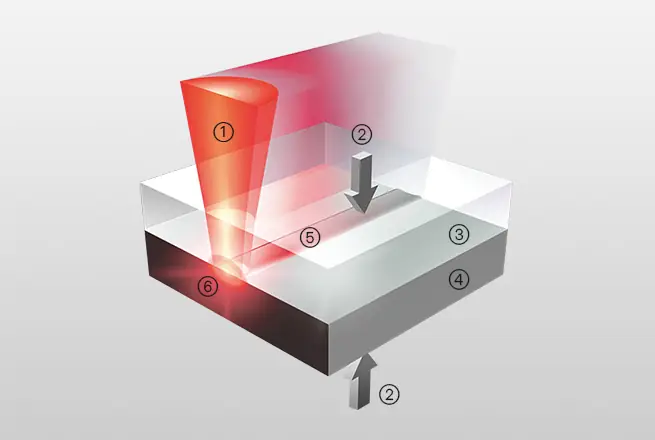
Laser Welding Principle

In laser welding of thermoplastics, a joining partner that is transparent to the laser radiation is joined to an absorbent joining partner.
 
The laser beam penetrates the transparent plastic and hits the absorbing plastic. There, the energy of the radiation is converted into heat and the plastic melts. Because the transparent plastic is in close contact with the absorbing partner, thermal conduction causes it to melt as well, therefore a bond is formed. When the plastics cool, the weld is completely formed.
principle

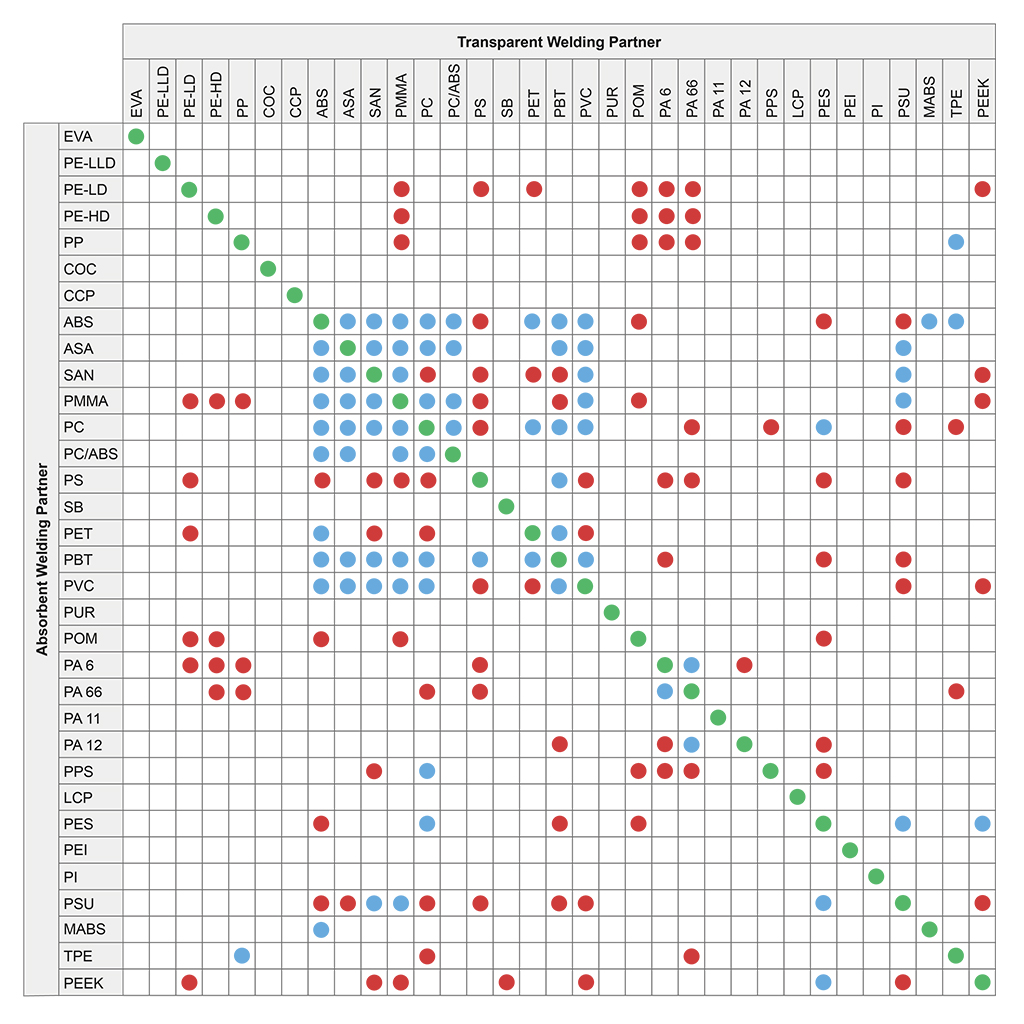
Material Compatibility Chart

• Excellent weldability when laser transmission is present

• Good weldability when laser transmission is present

• Weldability is possible but should be verified through trial runs

  • sales@hymson.ch
  • support@hymson.ch
Loading...